
Rollover Accident Lawyer

L_E-35_year-badge(1)

Vehicle rollover accidents can cause some of the most devastating injuries in a motor vehicle crash. When a vehicle tips onto its side or roof, occupants may suffer traumatic brain injuries, spinal cord injuries, fractures, paralysis, burns, or fatal injuries. In some cases, the vehicle itself may be partly responsible for what happened.

A rollover may be caused by a vehicle’s design, a defective component, a tire failure, or another safety defect that increases the risk of a rollover or makes the resulting injuries more severe. Defects involving a vehicle’s roof, seat belts, airbags, doors, suspension, or stability systems may also contribute to serious injuries during a crash.

Determining whether a vehicle defect played a role often requires a detailed investigation of the vehicle, crash scene, and available evidence. Langdon & Emison represents rollover accident victims nationwide and has extensive experience investigating complex vehicle defect and product liability claims. With $1 billion recovered for clients, our attorneys have the resources and experience to take on manufacturers and other responsible parties.

If you or a loved one was seriously injured in a vehicle rollover, call Langdon & Emison at 866-931-2115 to discuss your case.
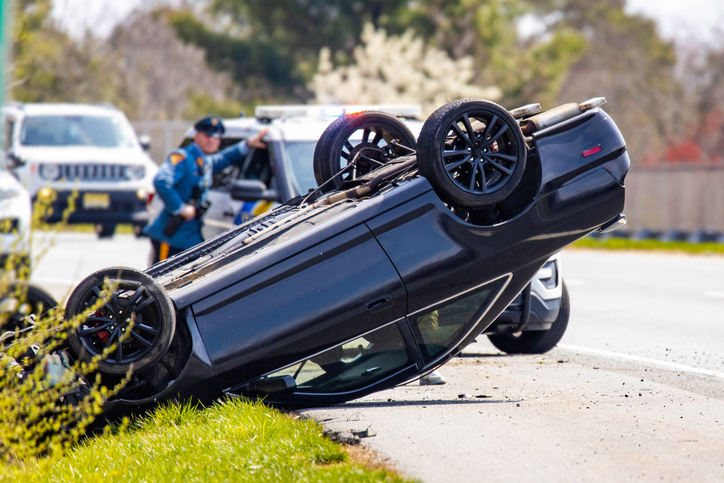
rollover accident lawyer

What Causes a Vehicle to Roll Over?

A vehicle rollover occurs when a vehicle tips onto its side or roof during a crash or other driving event. While rollovers can happen for many reasons, certain vehicles and circumstances may make a rollover more likely. Common factors that can contribute to a rollover include:

  • Vehicle design: A high center of gravity, narrow track width, or other design characteristics can affect a vehicle’s stability during sudden maneuvers.
  • Excessive speed: Traveling too quickly, particularly while making a sharp turn, can increase the forces acting on a vehicle and make it more difficult to maintain stability.
  • Sudden steering maneuvers: Swerving to avoid another vehicle, obstacle, or hazard can cause a vehicle to become unstable.
  • Tire failure: A defective, underinflated, or damaged tire can cause a driver to lose control and may contribute to a rollover.
  • Road conditions: Uneven pavement, steep slopes, soft shoulders, potholes, and other roadway hazards can affect vehicle stability.
  • Vehicle loading: Improperly distributed or excessive weight can change a vehicle’s center of gravity and increase rollover risk.
  • Defective components: Failures involving suspension, steering, tires, wheels, or electronic stability systems may contribute to a rollover.

Not every rollover accident is the result of a defective vehicle. Driver behavior, roadway conditions, and other factors may also play a role. However, determining exactly what caused a rollover is important when serious injuries occur. A thorough investigation can help establish whether a vehicle defect or component failure contributed to the crash.

How Defective Vehicles Can Increase the Risk of a Rollover

Some vehicles are more susceptible to rollovers because of their design or the way their components function. When a vehicle has a defect that compromises its stability, even a sudden maneuver or relatively minor impact may result in a rollover that otherwise might have been avoided.

Potential vehicle defects that may increase rollover risk include:

  • Unstable vehicle design: A high center of gravity or other design characteristics may make a vehicle more susceptible to tipping during sharp turns or sudden maneuvers.
  • Defective suspension systems: A failure in the suspension can affect handling, stability, and the vehicle’s ability to respond appropriately to steering inputs.
  • Steering defects: A defective steering component can cause a driver to lose control or make it difficult to correct the vehicle’s path.
  • Tire or wheel defects: Defective tires or wheels can fail unexpectedly and cause a sudden loss of control.
  • Electronic stability control defects: Electronic systems designed to help maintain vehicle stability may fail to operate as intended.
  • Manufacturing defects: A vehicle or component may differ from its intended design because of an error during manufacturing or assembly.
  • Inadequate warnings: Manufacturers may have a responsibility to warn consumers about known risks associated with a vehicle’s handling, loading requirements, or rollover characteristics.

A vehicle does not necessarily have to be the sole cause of a rollover for a manufacturer or other responsible party to potentially face liability. For example, a vehicle defect may contribute to a crash that was also influenced by road conditions or another driver’s actions. Investigating the circumstances of the accident can help determine whether a defective vehicle or component played a role.

Defective Vehicle Features Can Make Rollover Injuries Worse

A vehicle defect does not necessarily have to cause a rollover to result in a product liability claim. Some defects can increase the severity of injuries after a vehicle has already begun to roll. Safety systems and structural components are designed to protect occupants during a crash, and when they fail to perform as intended, the consequences can be catastrophic.

Defective or inadequate features that may contribute to more severe rollover injuries include:

  • Roof structures: A roof that collapses excessively during a rollover can reduce occupant survival space and increase the risk of head, neck, and spinal injuries.
  • Seat belts: Defective seat belts may fail to properly restrain occupants, increasing the risk of serious injuries or ejection from the vehicle.
  • Airbags: Airbags that fail to deploy, deploy improperly, or deploy at the wrong time may not provide the protection occupants need during a rollover.
  • Door latches: Defective door latches may allow doors to open during a rollover, potentially resulting in occupant ejection.
  • Windows and glazing: Defective or inadequate window materials may contribute to occupant ejection or other injuries during a rollover.
  • Seats and seat structures: A defective seat or seat attachment may fail under the forces of a rollover, increasing the risk of serious injury.
  • Fuel systems: Defects involving a vehicle’s fuel system can increase the risk of fuel leaks and fires following a rollover.

These cases can involve complicated questions about vehicle engineering, crashworthiness, and occupant protection. An investigation may be necessary to determine whether the vehicle’s design and safety features performed as they should have and whether a safer alternative was available.

Common Injuries in Vehicle Rollover Accidents

Rollover crashes can expose occupants to significant forces and create multiple points of impact. Occupants may be thrown against the interior of the vehicle, struck by collapsing components, or ejected from the vehicle entirely. As a result, rollover accidents can cause severe and potentially life-altering injuries.

Common rollover accident injuries include:

  • Traumatic brain injuries (TBIs): A blow to the head or violent movement of the brain within the skull can cause concussions and more severe brain injuries.
  • Spinal cord injuries: Damage to the spinal cord or vertebrae can result in permanent nerve damage, paralysis, and other disabilities.
  • Broken bones and fractures: The forces involved in a rollover can cause fractures throughout the body, including complex fractures that require surgery.
  • Internal injuries: Blunt-force trauma may damage internal organs or cause internal bleeding that requires immediate medical attention.
  • Crush injuries: Occupants may suffer severe injuries when part of the vehicle’s structure collapses into the passenger compartment.
  • Amputations: Particularly severe crashes may result in traumatic amputations or injuries that ultimately require surgical amputation.
  • Burn injuries: A damaged fuel system or other vehicle defect can contribute to a post-crash fire, causing serious burns.
  • Lacerations and other soft-tissue injuries: Broken glass, vehicle components, and other debris can cause deep cuts and significant tissue damage.
  • Fatal injuries: In the most serious rollover accidents, injuries may prove fatal.

The effects of a rollover injury can extend far beyond the initial emergency treatment. Victims may require ongoing medical care, rehabilitation, assistive equipment, and other support, while severe disabilities can affect their ability to work and participate in everyday activities. When a defective vehicle or component contributed to the crash or injuries, determining the responsible parties may be an important part of pursuing compensation.

Who May Be Liable for a Rollover Accident?

Determining who is responsible for a rollover accident requires looking closely at how the crash occurred and whether a defective vehicle or component contributed to the accident or injuries. Depending on the circumstances, multiple parties may potentially be held liable.

Potentially responsible parties can include:

  • Vehicle manufacturers: A manufacturer may be liable when a vehicle’s design or manufacturing process creates an unreasonable safety risk.
  • Parts manufacturers: Companies that manufacture tires, airbags, seat belts, suspension components, steering systems, or other vehicle parts may be responsible when a defective component contributes to a rollover or injury.
  • Distributors and suppliers: Other companies in the vehicle’s supply chain may potentially share responsibility for distributing a defective product.
  • Dealerships or repair facilities: In some circumstances, improper installation, repairs, or modifications may contribute to a vehicle’s failure or crash.
  • Other drivers: A negligent driver may cause a collision that results in a rollover. This does not necessarily eliminate the possibility that a vehicle defect also contributed to the resulting injuries.

Rollover cases can involve more than one contributing factor. For example, another driver’s actions may initiate a crash, while a vehicle’s defective roof structure, seat belt, or other safety feature may make the resulting injuries substantially worse. An investigation can help determine how each factor contributed to the accident and whether one or more parties may be legally responsible.

How We Investigate Vehicle Rollover Cases

Rollover accident and vehicle defect cases often require an extensive investigation. Evidence can disappear or change over time, particularly if the vehicle is repaired, salvaged, or otherwise altered after the crash. Preserving and examining the vehicle as soon as possible can therefore be critical.

At Langdon & Emison, our attorneys can investigate the circumstances surrounding a rollover accident and work with qualified experts when appropriate. Depending on the case, an investigation may involve:

  • Preserving and inspecting the vehicle: The vehicle itself can provide important evidence about what happened during the crash and how its components performed.
  • Analyzing crash damage: Examining vehicle deformation and damage patterns can help reconstruct the rollover and determine how occupants were exposed to injury.
  • Reviewing vehicle stability and design: Engineers can evaluate the vehicle’s handling characteristics, center of gravity, and other design factors that may affect rollover risk.
  • Examining tires and wheels: Tire condition, manufacturing information, damage, and failure patterns may help determine whether a tire or wheel defect contributed to the crash.
  • Analyzing safety systems: Seat belts, airbags, door latches, roof structures, seats, and other occupant-protection systems may be inspected to determine whether they performed as intended.
  • Reviewing electronic data: When available, information from a vehicle’s event data recorder may provide evidence about speed, braking, steering, and other circumstances immediately before a crash.
  • Investigating the crash scene: Skid marks, roadway conditions, vehicle positions, photographs, and other scene evidence can help establish how the rollover occurred.
  • Reviewing recalls and similar incidents: Prior recalls, consumer complaints, technical information, and other evidence may help identify recurring safety problems.
  • Consulting qualified experts: Accident reconstructionists, engineers, medical professionals, and other specialists may help determine how a defect contributed to the crash or injuries.

A thorough investigation can help answer critical questions: Did a defect cause or contribute to the rollover? Did a defective component make the injuries worse? And could a safer vehicle design or component have prevented or reduced the harm? The answers can be important when pursuing a product liability claim against a manufacturer or other responsible party.

Contact a National Rollover Accident Lawyer

A rollover accident can leave victims facing catastrophic injuries, extensive medical treatment, and lasting changes to their lives. When a defective vehicle or component contributed to the crash or made the resulting injuries worse, the manufacturer or another responsible party may be held accountable.

Langdon & Emison has extensive experience investigating complex vehicle defect and product liability claims. Our attorneys have the resources to investigate rollover accidents involving manufacturers and other large corporations.

If you or a loved one was seriously injured in a vehicle rollover, call 866-931-2115 or fill out our online form to speak with Langdon & Emison about your case.

Frequently Asked Questions About Rollover Accidents

What is a rollover accident?

A rollover accident occurs when a vehicle tips onto its side or roof. Rollovers can result from vehicle defects, collisions, sudden maneuvers, road conditions, or other factors.

Can a defective vehicle cause a rollover?

Yes. Defects involving a vehicle’s design, tires, suspension, steering, stability systems, or other components may contribute to a rollover.

Can I sue a manufacturer for a rollover accident?

Potentially. If a defective vehicle or component caused or contributed to the accident or injuries, the manufacturer or another responsible party may be liable.

What if another driver caused my rollover accident?

Another driver’s negligence may have caused the initial collision, but a defective vehicle or safety feature could also contribute to the severity of your injuries.

How do I prove a vehicle was defective?

Evidence may include the vehicle itself, crash data, engineering analysis, accident reconstruction, safety records, recalls, and evidence of similar incidents.

What should I do with my vehicle after a rollover?

Preserve the vehicle and avoid repairing, selling, or disposing of it before it can be properly inspected. The vehicle may contain important evidence about the crash.

How long do I have to file a rollover accident lawsuit?

The deadline depends on the state and the type of claim. Because statutes of limitations can be strict, it is important to discuss your case with an attorney as soon as possible.

How much is a rollover accident claim worth?

The value depends on factors such as the severity of the injuries, medical expenses, lost income, long-term effects, and the evidence establishing liability.

Do I need a lawyer for a rollover accident?

A lawyer may be particularly helpful when a rollover involves a potential vehicle defect, serious injuries, or a claim against a vehicle or parts manufacturer.


When it matters, we'll be there.

"*" indicates required fields

J. Kent Emision
Partner

Why Referring Attorneys Choose Langdon & Emison

Langdon & Emison works with referring attorneys across the country to help maximize their clients’ recoveries across an array of personal injury litigation. In just the past three years, we have paid more than $20 million to attorneys who have referred cases to our firm.