
Call us for free consultation


Commercial trucking cases are among the most complex and high-stakes matters in personal injury law. Unlike ordinary motor vehicle collisions, trucking litigation often involves catastrophic injuries, extensive federal regulations, sophisticated corporate defendants, and evidence that can disappear if it is not preserved immediately.
When a serious trucking crash occurs, the investigation frequently extends far beyond the actions of a single driver. Motor carriers, maintenance contractors, manufacturers, logistics companies, and other entities may all play a role in the events leading up to a collision. Determining what happened requires a thorough understanding of the trucking industry, federal safety regulations, electronic data systems, and the evidence unique to commercial vehicles.
If you or a loved one has been seriously injured in a trucking-related incident, contact Langdon & Emison today. Call 866-931-2115 for a free consultation and learn how our trucking litigation team can help protect your rights.
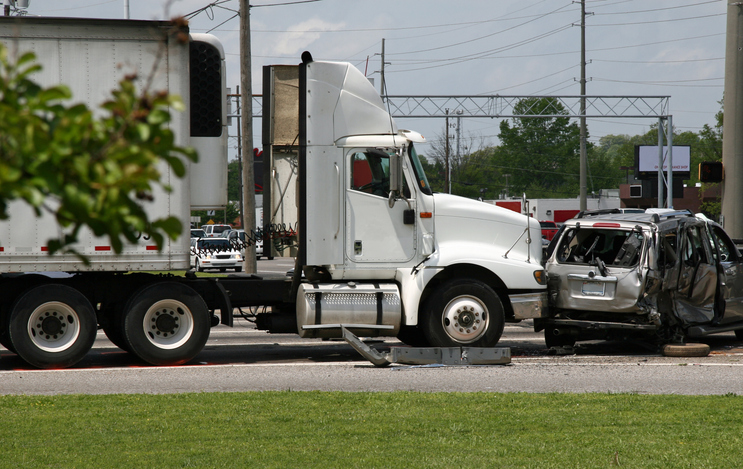
Trucking litigation is far more complex than a typical car accident claim. These cases often involve catastrophic injuries, multiple parties, extensive federal regulations, and critical evidence that must be preserved immediately.
Unlike an ordinary traffic collision, trucking cases frequently require attorneys to investigate:
Trucking litigation may also involve multiple layers of insurance coverage and several potentially responsible parties. Depending on the circumstances, liability can extend beyond the driver to transportation companies, maintenance providers, equipment manufacturers, or other entities involved in the operation of a commercial vehicle.
Because the damages in these cases are often substantial, trucking companies and their insurers typically begin building their defense immediately after a serious incident occurs. They may dispatch investigators, preserve favorable evidence, and work with defense counsel long before an injured victim has the opportunity to fully understand what happened.
Successfully handling trucking litigation requires a thorough understanding of the trucking industry, federal safety regulations, accident reconstruction, and complex litigation strategy. These are not ordinary injury cases, and they should not be treated as such.
Not every law firm is equipped to handle complex trucking litigation.
For more than four decades, Langdon & Emison has represented clients in high-stakes injury and wrongful death cases involving commercial transportation companies and other powerful defendants. Our attorneys understand the extensive investigation, expert analysis, and trial preparation often required in trucking cases where the consequences are severe and the damages substantial.
We approach these matters with a focus on uncovering the facts, preserving critical evidence, and holding negligent parties accountable. Whether a case involves regulatory violations, unsafe company practices, defective equipment, or other contributing factors, our goal is to build the strongest case possible on behalf of our clients.
When trucking companies and their insurers are prepared to fight aggressively, experience, resources, and trial readiness matter.
| $16 million in confidential settlement after a Missouri trucking accident. |
| $7 million in Reagan v. Dunaway Timber after a Dunaway Timber Company truck driver lost control of his semi-truck, crossed the centerline on a highway, and struck an oncoming semi-truck. |
| $4.5 million in Eckerberg v. Inter-State Studio, Inc. after a commercial truck accident that caused our client to suffer life-altering injuries. |
Commercial trucking companies are subject to extensive federal safety regulations intended to reduce preventable crashes and protect the public. These rules, enforced by the Federal Motor Carrier Safety Administration (FMCSA), establish standards for drivers, carriers, vehicle maintenance, and overall fleet operations.
When a serious trucking incident occurs, compliance with these regulations often becomes a central issue in the investigation.
Key areas of FMCSA regulation include:
Violations of federal trucking regulations do not automatically establish liability, but they can provide important evidence regarding negligence, safety failures, and whether a trucking company prioritized profits over public safety.
At Langdon & Emison, we understand how to analyze regulatory compliance, identify safety violations, and incorporate those findings into a comprehensive trucking litigation strategy.
Evidence in trucking cases can disappear quickly. Electronic data may be overwritten, vehicles may be repaired or returned to service, and important records may become more difficult to obtain as time passes.
For that reason, preserving evidence is often one of the most important steps in a trucking case.
Depending on the circumstances, critical evidence may include:
This evidence can help establish what occurred before, during, and after a trucking incident. It may reveal whether safety violations occurred, whether company policies contributed to the event, or whether critical warnings were ignored.
Because some forms of evidence may only be retained for a limited period of time, immediate action is often necessary. An experienced trucking litigation team can take steps to preserve records, prevent spoliation, and ensure important evidence remains available throughout the case.
Many trucking incidents are not the result of a single mistake. Instead, they often stem from a series of decisions, safety failures, or regulatory violations that create an unreasonable risk of harm.
During a trucking litigation investigation, attorneys may uncover evidence of:
In some cases, evidence reveals that a trucking company placed productivity, delivery schedules, or profits ahead of safety. When this occurs, liability may extend beyond the actions of an individual driver and involve broader corporate conduct.
Identifying these failures requires a thorough investigation and a deep understanding of the trucking industry. At Langdon & Emison, we work to uncover the facts, determine how the incident occurred, and hold responsible parties accountable for the consequences of their actions.
The hours and days following a serious trucking incident can be critical. While injured victims are focused on medical treatment and recovery, trucking companies and insurers may already be taking steps to protect their interests.
Evidence that could play a significant role in a future claim may become unavailable if prompt action is not taken. Electronic data can be overwritten, vehicles may be repaired, and records may become more difficult to obtain over time.
An early investigation may help:
In complex trucking litigation, waiting too long to investigate can place victims at a disadvantage. Early case development allows attorneys to gather evidence while it is still available, identify potential regulatory violations, and begin building a strong foundation for the claim.
At Langdon & Emison, we understand the urgency these cases require and the importance of preserving evidence before it disappears.
Because of the size and weight of commercial trucks, trucking-related incidents often result in some of the most severe injuries seen in personal injury litigation. Victims may face permanent disabilities, extensive medical treatment, and lifelong financial and personal challenges.
Some of the catastrophic injuries commonly involved in trucking litigation include:
These injuries frequently require ongoing medical care, rehabilitation, assistive devices, and long-term support. In many cases, the full impact of the injury may not be known for months or even years after the incident.
When catastrophic harm occurs, it is important to fully evaluate both current losses and future needs. Langdon & Emison works with medical professionals, life-care planners, and other experts to understand the long-term consequences of serious injuries and pursue compensation that reflects the full extent of the damage.
The damages in trucking litigation are often substantial because the injuries involved are frequently severe and life-changing. A successful claim may provide compensation for both economic losses and the broader impact the incident has had on a victim’s life.
Depending on the circumstances, compensation may include:
Every trucking case is different, and the value of a claim depends on numerous factors, including the severity of the injuries, the extent of future care needs, and the evidence establishing liability.
At Langdon & Emison, we work to develop a complete understanding of our clients’ losses so that any demand for compensation accurately reflects both the immediate and long-term consequences of the incident.
Trucking litigation often involves significant financial exposure for trucking companies, insurers, and other corporate defendants. When catastrophic injuries or wrongful death are involved, the potential damages can be substantial, which is one reason these cases are frequently contested from the very beginning.
Trucking companies may have access to considerable resources, including:
Shortly after a serious incident, these parties may begin conducting their own investigation and developing defenses to limit liability. Common arguments may include:
Successfully overcoming these defenses often requires a detailed investigation, strong expert testimony, and thorough preparation. At Langdon & Emison, we understand how trucking companies defend these cases and work to build claims that can withstand aggressive challenges from well-funded opponents.
When a trucking-related incident results in catastrophic injuries or the loss of a loved one, the stakes are often extraordinarily high. These cases can involve complex investigations, extensive evidence, federal safety regulations, and corporate defendants determined to protect their interests.
For 40 years, Langdon & Emison has represented individuals and families in serious injury and wrongful death litigation nationwide. We have the experience, resources, and commitment necessary to pursue accountability and seek meaningful results in complex trucking cases.
If you or a loved one has been harmed in a trucking-related incident, contact Langdon & Emison today. Call 866-931-2115 for a free consultation or complete our online contact form to discuss your case with our team. The sooner you contact our firm, the sooner steps can be taken to preserve evidence, investigate the circumstances, and protect your rights.
Trucking litigation often involves federal regulations, corporate defendants, extensive electronic records, and multiple potentially responsible parties. These cases typically require a more detailed investigation than a standard car accident claim.
Many commercial trucks are equipped with event data recorders, commonly called “black boxes,” that can capture information such as speed, braking activity, throttle position, and other operational data. This evidence can be important when investigating how an incident occurred.
Commercial carriers are generally subject to regulations enforced by the Federal Motor Carrier Safety Administration (FMCSA). These rules govern areas such as driver qualifications, hours of service, vehicle maintenance, inspections, and drug and alcohol testing.
Retention periods vary depending on the type of record involved. Some electronic data and driver records may only be maintained for a limited time, which is one reason early legal intervention can be critical.
Yes. Depending on the circumstances, liability may extend beyond the trucking company itself. Other parties may include maintenance providers, vehicle manufacturers, logistics companies, contractors, or other entities involved in commercial transportation operations.
Courts may impose consequences when evidence is intentionally destroyed or improperly withheld. However, preventing the loss of evidence is often easier than attempting to address it later, which is why prompt investigation is so important.
Many trucking cases settle before trial, but high-value claims involving catastrophic injuries or disputed liability may proceed to litigation. Preparing a case as though it will be tried often strengthens a firm’s position during settlement negotiations.
Critical evidence such as electronic data, maintenance records, surveillance footage, and witness testimony may become more difficult to obtain as time passes. Early investigation can help preserve information that may be important to the case.
The value of a trucking case depends on factors such as the severity of the injuries, medical expenses, future care needs, lost earning capacity, and the strength of the evidence. Because these cases often involve catastrophic harm, damages can be significant.
Trucking cases frequently involve complex regulations, sophisticated defendants, and extensive evidence. An attorney with experience handling trucking litigation can help investigate the incident, preserve critical records, identify responsible parties, and pursue the full compensation available under the law.