

Your tires are the only part of your vehicle that touches the road. When the tread comes off a tire at highway speed, the driver can lose control in seconds, and a routine drive can end in a rollover.
Tire manufacturers often argue that tread separations are “controllable events.” Langdon & Emison attorney David Brose explains why that argument doesn’t hold up once you look at how these failures happen on real roads.
What Is a Tread Separation?
A tread separation is just what it sounds like. The tread, either all of it or part of it, comes apart from the body of the tire, called the carcass.
That can happen in several ways:
- The tread pulls loose from the top steel belt.
- The top belt, with the tread still attached, pulls away from the bottom belt.
- A separation develops lower in the belt package.
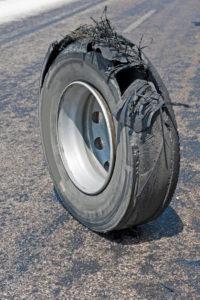
Whatever form it takes, the result is the same: the tire loses the tread that is designed to grip the road. Sometimes the tread comes off “shoulder to shoulder,” all the way around the tire. Sometimes only part of it goes.
Why Tread Separations Are So Dangerous
“The problem of a tread separation is that you’re going to inject negative physics into the control and operation of that vehicle,” Brose explains.
Passenger cars, light trucks, and heavy trucks all depend on their tread for firm, steady contact with the road. When the tread goes, the grip goes with it.
The failure also doesn’t happen all at once. As the tire keeps turning, the separating tread becomes a flap that whips around at the tire’s rotating speed. That flap causes violent vibration and instability at that corner of the vehicle, which can pull the vehicle sharply to one side.
The “Controllable Event” Defense vs. Reality
Tire manufacturers and other tire defendants often argue that tire failures, including tread separations, are entirely controllable. Brose says that argument depends on conditions everyday drivers almost never have.
An ordinary driver on the interstate gets no warning. They don’t know that their right rear tire is about to fail, or that the car is about to jerk right or left. They have to react instantly while dealing with:
- Oncoming traffic
- Vehicles traveling in the same direction
- Limited lanes, shoulders, medians, and other roadway constraints
“If you’ve got a roadway all to yourself… and you’ve got all of this roadway to try to regain control, then maybe it’s a controllable event,” Brose says. “But that’s not the world that we exist in.”
That gap between test-track conditions and real roads is what makes tread separations especially deadly.
What to Do If You’ve Been Hurt in a Tire-Failure Crash
If a tread separation or other tire failure caused a crash that hurt you or someone you love, the tire itself can be critical evidence. Take these steps:
- Keep the tire and the vehicle. Don’t let them be thrown away, recycled, or repaired.
- Write down the tire details if you can, including the brand, model, size, and DOT code on the sidewall.
- Hold on to your records, such as purchase receipts, service and rotation records, and any recall notices.
- Talk with an attorney who handles tire and product-defect cases before you speak with a manufacturer or insurer.
Langdon & Emison has represented families in serious product-defect cases across the country. If you have questions about a tire-failure crash, contact our team for a free consultation.
The information in this post is for general educational purposes only and is not legal advice. Every case is different. Past results do not guarantee a similar outcome.