

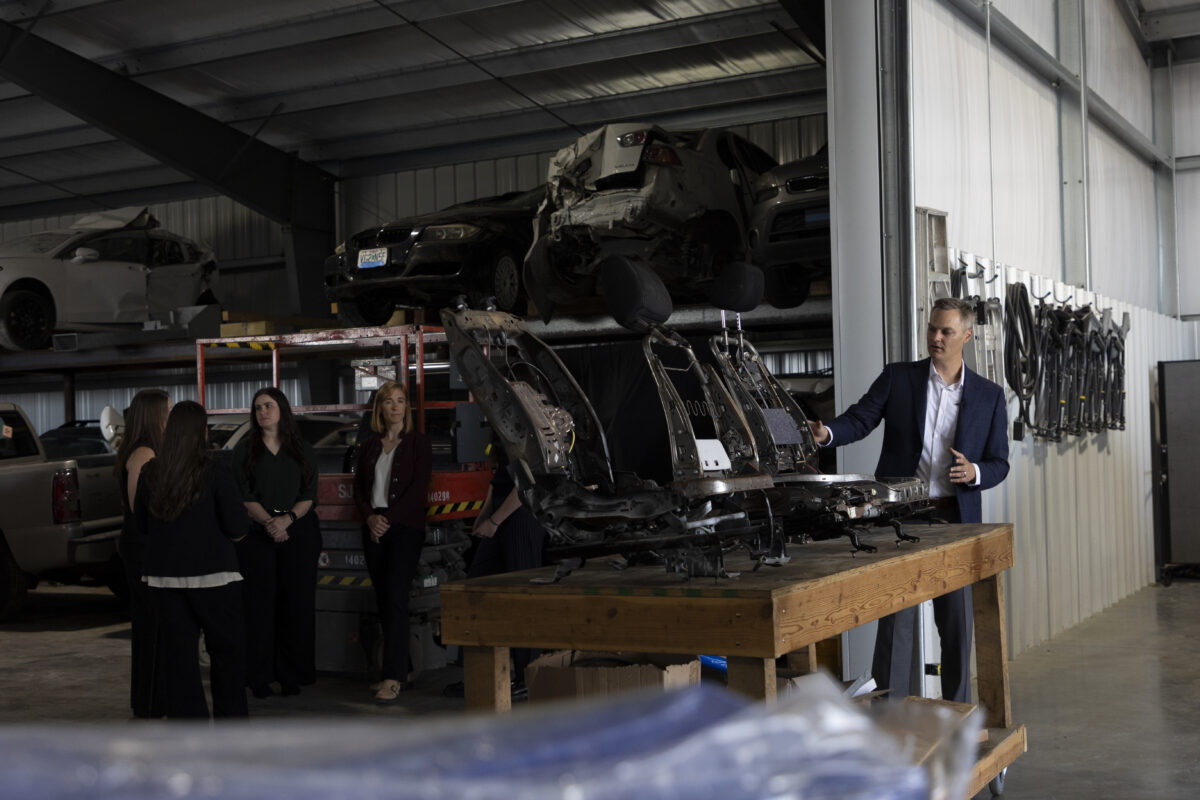
A client is stopped at a red light and rear-ended at city speeds. The damage to the car looks modest, but the client is now quadriplegic. The at-fault driver has minimal insurance, and the file looks like a policy-limits case.
It may not be. When the injuries are far worse than the crash seems to explain, look at the seat.
Our Attorneys have spent 40 years on automotive seatback cases. These claims are often missed, and they can change both the value and the outcome of a case.
What a Seat Back Is Supposed to Do
In a frontal crash, seat belts and airbags keep the occupant from striking the interior. In a rear impact, that job falls mostly to the seat back.
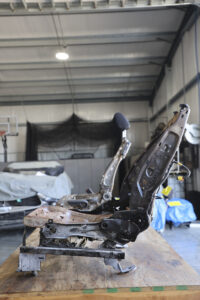
When a car is hit from behind, the occupant’s body moves rearward, toward the impact. A properly designed seat back stays reasonably upright, absorbs that load, and keeps the occupant in the seat. When the seat back collapses instead, two things go wrong:
- The shoulder belt stops working. In most vehicles, the shoulder belt is anchored to the B-pillar, not the seat. Once the seat back yields, the belt no longer restrains the occupant, who can ramp up and back.
- The front occupant is thrown into the rear seat area, often suffering catastrophic spinal cord or brain injuries.
The Screening Rule
Any rear-end crash with a serious spinal or brain injury, in the front seat or the back, deserves a seat back review.
The typical fact pattern is simple: a client who did nothing wrong, stopped at a light or sign or slowing in traffic, is struck from behind. Injuries usually include cervical or thoracic spinal cord damage or traumatic brain injury in the front seat, and skull fractures or severe brain injuries to children or others in the rear.
Don’t let a moderate crash speed or modest vehicle damage rule out the claim. The quadriplegia case above involved a residential-speed impact.
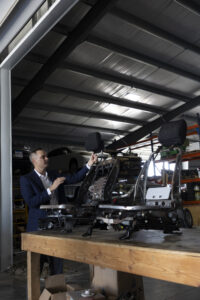
Red Flags in the Photos
Look closely at the scene and vehicle photos for:
- A seat reclined or leaning rearward, even if it isn’t lying flat
- A twisted seat back. This often points to a single recliner mechanism on the outboard (door) side, with nothing resisting the load on the inboard side.
- Broken, missing, or pulled-out headrests
- Cracked or broken headrest guide sleeves. These are the small plastic parts the headrest posts pass through. They often cost less than a dollar, and their failure is strong evidence that the occupant slid up and over the seat back.
- Rear-seat occupant injuries that line up with contact from the front seat or its occupant
A headrest failure deserves special attention. When the occupant ramps up the seat back and the headrest gives way, the spine can overextend over the top of the seat. That mechanism often causes thoracic spinal injuries and paraplegia.
Ask the Right Question
The instinctive question is “What broke?” That’s the wrong place to start.
A seat back case isn’t defined by a broken part. It’s defined by a seat that didn’t do its job: it let the occupant move rearward into the rear seat area, or into someone seated there. Sometimes a component does fail. Common failure modes include:
- Recliners whose locking teeth slip or break
- Cracked welds in the seat frame
- Failed seat tracks
- Mounting bolts that pull out of the vehicle structure
- Headrests that break or come out of the seat
Sometimes nothing breaks at all. The seat is simply built from weak, elastic material that bends out of the way under load instead of holding the occupant. A seat with no broken part can still be defective.
Don’t Trust the Final Seat Position
The way a seat looks after the crash may not show how it performed during the crash.
Police, firefighters, and EMTs often move seats to get a badly injured person out. A seat that collapsed may later be found close to upright, because its recliner still works and someone raised it. A seat found fully reclined may have been lowered during the rescue.
Interview first responders and early witnesses quickly. Ask where the occupant was, what position the seat back was in, and whether anyone moved it.
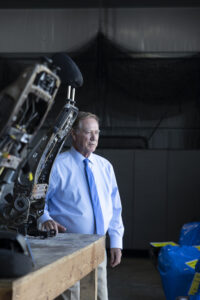
Preserve the Vehicle and the Seat
These cases are very difficult to prove without the actual vehicle and seat. Send preservation letters right away, and make sure the vehicle is not repaired, salvaged, or crushed.
Expect a joint de-trim. The seat’s covering and cushioning are removed, in front of the manufacturer and other interested parties, so everyone can examine the frame, recliners, welds, tracks, bolts, and headrest parts. Plan for experts in seat design and biomechanics to attend.
Build the Case on Failure Mode and Alternative Design
Two questions drive a seat back case:
- How did this seat fail to protect the occupant?
- Would a reasonably safer, feasible design have prevented or reduced the injuries?
Feasible alternatives have existed for years. They include:
- All-belts-to-seat (ABTS) designs. The seat belt is built into a stronger, stiffer seat frame. In comparison testing, ABTS seats stayed upright in rear impacts where conventional seats collapsed.
- Dual recliners, which resist the load on both sides of the seat and prevent the twisting seen with single outboard recliners
- Locking headrests and integrated head restraint systems that stay in place under load
- Stronger frames and materials that absorb energy without collapsing
Talk to Us About a Seat Back Case
If you have a rear-end crash case with a catastrophic injury and you’re not sure whether the seat played a role, we’re glad to talk it through. Langdon & Emison works with referring and co-counsel attorneys on seatback and other vehicle defect cases, from evidence preservation and de-trim through trial.
